
Have you ever finished a long day at your desk, stood up to stretch, and realized just how stiff your body feels? Your shoulders feel tight, your neck needs a little movement, and your hips don’t seem quite as comfortable as they did when you sat down that morning. It’s easy to see how it happens. You start your day with a cup of coffee, open your laptop, and get straight to work. One email leads to another, meetings fill your calendar, and before you know it, several hours have passed. You’ve barely moved from your chair.
If this sounds familiar, let’s take a moment to change that. You don’t need to be flexible, own a collection of yoga props, or spend an hour on your mat to get started. A few gentle yoga stretches can give your body an opportunity to move in different ways throughout the day. And the best part? You can do several of them right at your desk.
In this guide, we’ll explore eight beginner-friendly stretches for your neck, shoulders, back, hips, and legs. I’ll also walk you through a simple five-minute routine you can fit between meetings or whenever you need a break from your screen.
So, find a comfortable position, let your shoulders relax, and let’s get started.
Why Your Body Needs a Break From Sitting
Let’s start with something you might recognize. Have you ever noticed your shoulders creeping toward your ears while you’re concentrating on your computer? Or perhaps you lean closer to your screen without realizing it, only to discover that you’ve been sitting in that position for the past hour. These habits are common, especially when work keeps you focused on a screen for long periods.
Sitting in one position for an extended time can place stress on certain muscles, particularly around the neck, shoulders, and upper back. Your hips and legs may also spend much of the day in relatively fixed positions. Over time, you might notice stiffness or discomfort when you finally stand up and move around.
This is where gentle yoga can become a useful part of your routine. Yoga encourages you to explore comfortable movements, pay attention to your breathing, and become more aware of how your body feels. You don’t have to perform advanced poses or stretch as deeply as someone else. The goal is to find movements that work for you.
And here’s something I want you to remember: you don’t have to wait until your body feels stiff to take a break. Standing up, walking around, and changing positions regularly are important, too. Think of yoga as one way to add more movement to your workday, not as a replacement for all the other ways your body needs to move.
8 Gentle Yoga Stretches for People Who Sit All Day
Before we begin, find a little space where you can move comfortably. For the seated stretches, choose a sturdy chair that doesn’t roll. For the standing movements, make sure you have enough room to move without bumping into your desk or other furniture.
Move slowly and breathe naturally throughout each stretch. You should feel comfortable, not strained. If a movement causes pain, dizziness, numbness, or tingling, stop rather than trying to push through it.
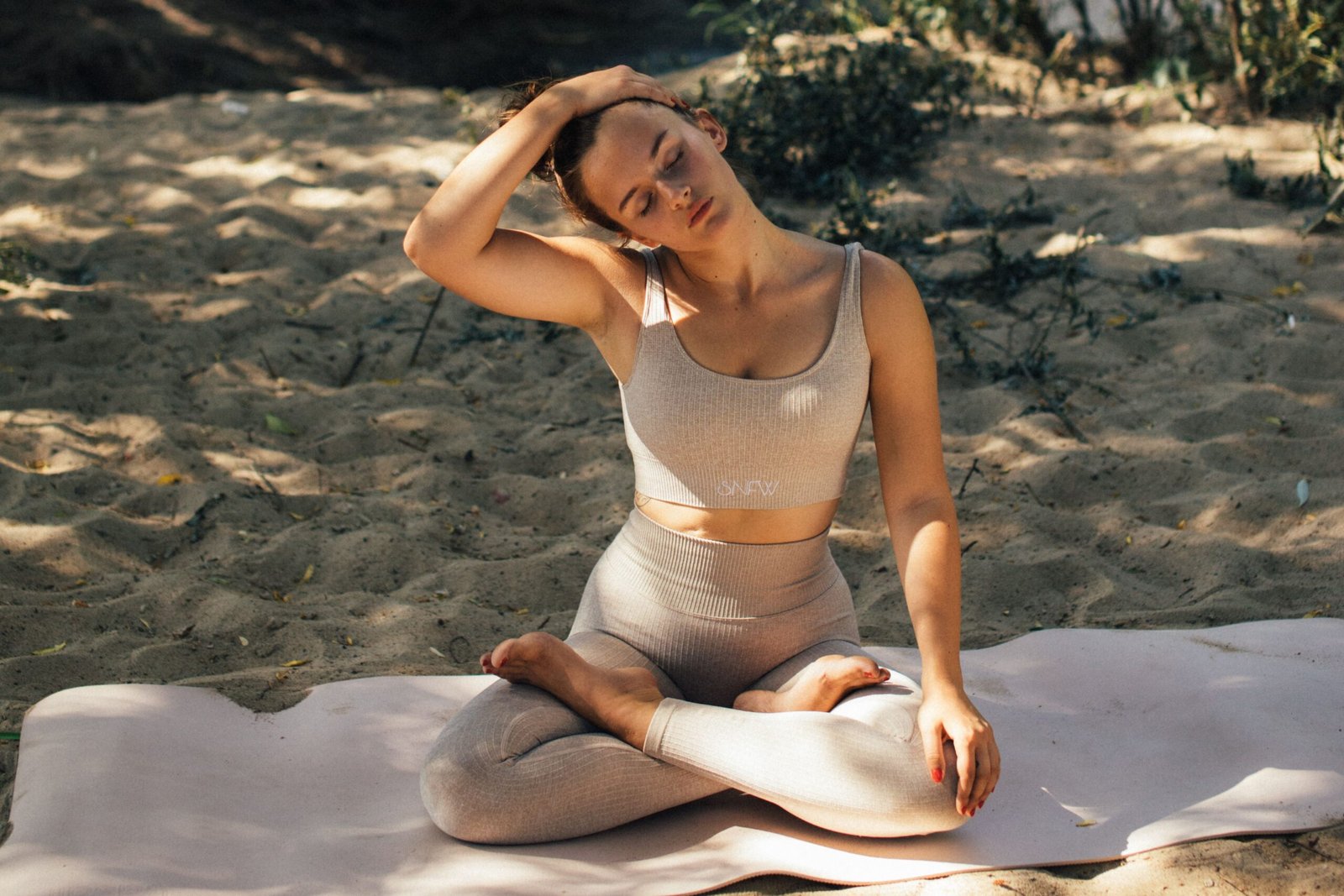
1: Seated Neck Stretch
Let’s begin with your neck. When you’re concentrating on a screen, it’s easy to hold your head in one position for a long time. This gentle movement gives your neck a chance to move without requiring you to leave your chair.
Sit comfortably with both feet flat on the floor and your hands resting on your thighs. Let your shoulders soften away from your ears. Slowly tilt your right ear toward your right shoulder while keeping your face pointing forward. You may feel a gentle stretch along the left side of your neck. Stay there for two or three comfortable breaths, then slowly return your head to the center and repeat on the other side.
Keep the movement small and relaxed. There’s no need to pull your head down with your hand or force your ear toward your shoulder. Your neck should feel comfortable throughout the movement.
A little tip: Try this stretch after a long video call or a period of focused screen work. If tilting your head causes pain, dizziness, or unusual sensations, stop and seek appropriate guidance if the symptoms persist.
2: Shoulder Rolls
Now let’s give your shoulders some attention. You might not realize how much tension you’re holding there until you take a moment to relax them. You can do shoulder rolls while sitting or standing. Let your arms hang naturally by your sides, then slowly lift your shoulders toward your ears. Move them backward in a gentle circle and allow them to settle down again. Repeat five times, then reverse the direction and make five slow circles forward.
Keep the circles comfortable rather than trying to make them as large as possible. Your arms should remain relaxed, and your breathing should feel natural. As you move, notice whether your shoulders feel different from how they did a moment ago. You don’t need to force them down or hold them in a rigid position. Simply give them an opportunity to move.
This is one of the easiest stretches to work into your day because you don’t need a yoga mat or any special equipment. Try it between tasks or whenever you notice yourself hunching toward your screen.
3: Seated Cat-Cow Stretch
If you have a few minutes to move your spine, let’s try Seated Cat-Cow. This gentle yoga movement takes your back through two different positions and is easy to practice in a chair.
Sit near the front of your chair with your feet flat on the floor and your hands resting on your thighs. As you inhale, gently lift your chest and allow your shoulders to move back a little. Keep your lower back comfortable rather than exaggerating the arch. As you exhale, round your upper back slightly and let your chin move gently toward your chest.
Continue moving between these two positions for five to eight slow rounds, letting your breathing guide the pace. Imagine your spine moving like a gentle wave rather than trying to create a perfect shape. If you’re new to yoga, it’s perfectly fine to keep the movement small. You don’t need to lean far forward or backward, and you shouldn’t feel pressure to match someone else’s range of motion.
Try this: When you’ve been sitting for a while, take a short break and move through a few comfortable rounds. You can return to your work afterward without needing to change clothes or rearrange your workspace.
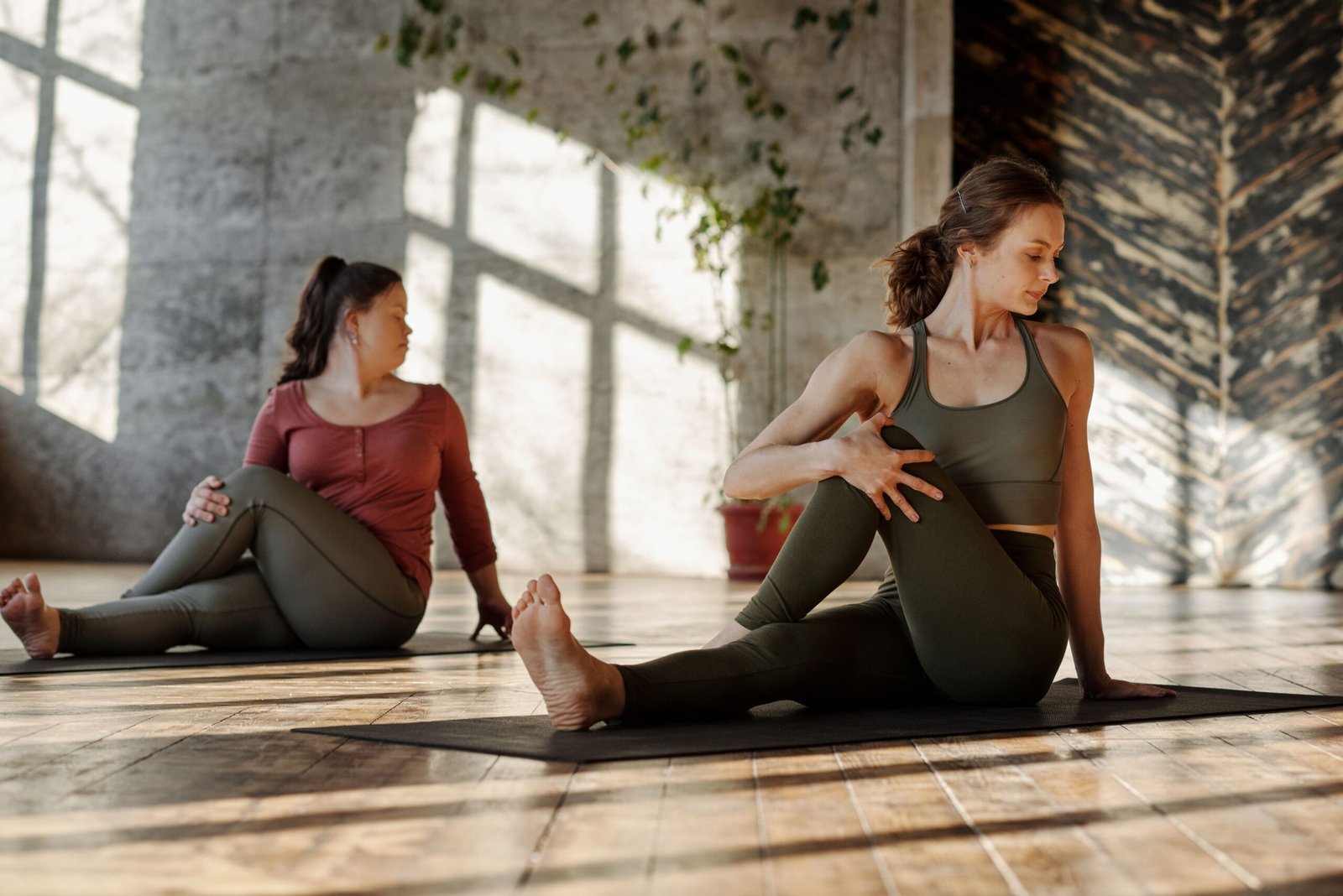
4: Seated Spinal Twist
Sometimes, we spend so much time facing forward that we forget to move our upper bodies in other directions. A gentle seated twist lets you explore a little rotation without getting down on the floor.
Sit upright with both feet flat on the ground. Place your right hand on your left thigh and rest your left hand lightly on the side or back of your chair. As you exhale, slowly turn your chest toward the left, keeping your hips facing forward. Stay in a comfortable position for two or three breaths, then return to the center and repeat on the opposite side.
Think of the movement as a gentle turn, not a competition to see how far you can twist. Your hands are there for light support, not to pull your body around. If twisting doesn’t feel comfortable, there’s no need to force it. You can skip this stretch and choose a gentler movement, such as shoulder rolls, instead. The idea is to give your body some variety during the day while respecting what feels comfortable for you.
5: Standing Chest Opener
Let’s stand up for this one. If you’ve been leaning toward your computer for much of the day, a gentle chest opener gives you an opportunity to move your shoulders and upper body into a different position.
Stand with your feet about hip-width apart and let your arms rest by your sides. Gently move your shoulders back and down without squeezing them together too hard. If it feels comfortable, bring your hands behind your body and loosely clasp them. Lift your chest slightly while keeping your ribs relaxed and your lower back in a comfortable position.
Take two or three natural breaths, then release your hands and return to a relaxed standing position. Can’t clasp your hands behind your back? That’s completely fine. Keep your arms by your sides and gently draw your shoulders back instead. You’ll still be able to explore the movement without forcing your arms into an uncomfortable position.
Remember, we’re not trying to create an exaggerated arch in your back. Keep the movement gentle, and stop if you feel discomfort in your shoulders or lower back.
6: Standing Side Stretch
This is a simple movement to try when you need a quick break from your screen. It gently stretches the sides of your torso and gives you a chance to move beyond the forward-facing position you may hold while working. Stand comfortably with your feet about hip-width apart. Raise your right arm overhead, keeping your left arm relaxed by your side. Slowly lean your upper body toward the left without twisting or shifting your hips too far. You should feel a gentle stretch along the right side of your torso.
Take two or three comfortable breaths, return to the center, and repeat on the other side. There’s no need to lean as far as possible. Imagine creating a little more space between your ribs rather than trying to reach a particular position. If raising your arm overhead bothers your shoulder, keep your hand on your hip and try a smaller side bend. You can also skip the movement if it doesn’t feel right for your body.
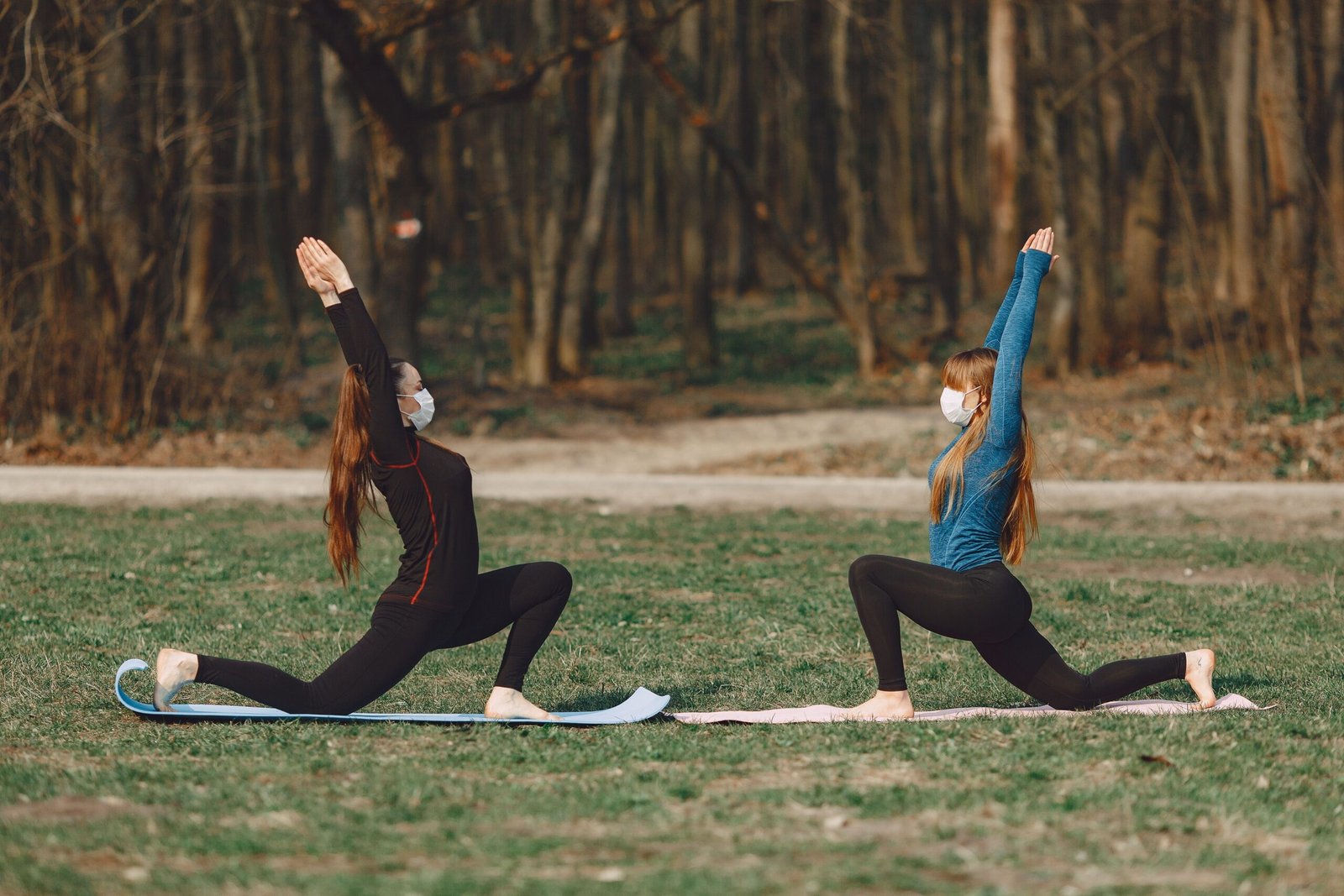
7: upported Low Lunge for the Hips
Let’s move away from the chair and give your hips some attention. When you sit for much of the day, your hips spend a lot of time bent. A supported Low Lunge allows you to explore a gentle stretch at the front of the hip.
Start on a yoga mat or another comfortable, nonslip surface. Come into a kneeling position and place a folded blanket under your back knee if you need extra cushioning. Step your right foot forward so it’s flat on the floor, with your right knee bent and comfortably positioned over your ankle.
Keep your torso upright and slowly shift your body forward a small amount. You may feel a gentle stretch at the front of your left hip. Stay there for a few natural breaths, then ease back to your starting position and switch sides. You don’t need to push your hips far forward or sink deeply into the lunge. A small movement is enough if that’s what feels comfortable.
If kneeling bothers your knees, don’t force yourself to stay in the position. You can try a gentle standing hip-flexor stretch with support from a wall or sturdy chair, or skip this movement altogether. The aim is to explore comfortable movement, not to test your flexibility.
More to Read:
1: How to Build a Weekly Workout Routine for Women: A Simple Beginner’s Plan
8: Standing Calf Stretch
Let’s finish the individual stretches with your lower legs. When you sit for long periods, you may not move your ankles and calves very much. Standing up and stretching gently gives them an opportunity to move.
Stand facing a wall and place both hands against it for support. Step your right foot backward, keeping your toes pointing toward the wall. Bend your left knee slightly and keep your right leg comfortably straight, with your right heel resting on the floor. Slowly lean forward until you feel a gentle stretch in your right calf.
Hold the position for about 15 to 20 seconds, breathing normally. Then step forward and repeat on the other side. If your back heel lifts off the floor, shorten your stance. There’s no need to lean farther forward to make the stretch feel stronger. Make sure your footing is secure before you begin, and keep the movement comfortable. If you feel pain in your ankle, knee, or calf, ease out of the stretch rather than pushing through it.
Your Simple 5-Minute Yoga Routine for Desk Workers
Now that you’ve learned the individual movements, let’s put a few of them together.
You don’t need to perform all eight stretches every time you take a break. A short routine that fits comfortably into your schedule may be easier to maintain than a long session that feels like another task on your to-do list.
For this five-minute sequence, we’ll focus on your neck, shoulders, spine, and upper body. You can do most of it beside your desk, using your chair for support when needed.
Start with shoulder rolls for about 30 seconds. Sit or stand comfortably and make slow circles with your shoulders, first backward and then forward. Let your arms relax, and avoid lifting your shoulders with unnecessary tension.
Next, spend about 30 seconds on gentle neck stretches. Slowly tilt your head from side to side, keeping your face pointed forward. Move only as far as feels comfortable, and return to the center between sides.
Move into Seated Cat-Cow for one minute. Sit with your feet flat on the floor and your hands resting on your thighs. Inhale as you gently lift your chest, then exhale as you round your upper back. Continue at a relaxed pace without forcing your spine into either position.
Spend another minute on gentle seated twists. Turn your chest slightly to one side, pause for a comfortable breath or two, and return to the center before repeating on the other side. Keep your hips facing forward, and don’t use your arms to pull yourself deeper into the twist.
Finish with a standing chest opener and side stretch for the remaining two minutes. Stand comfortably, draw your shoulders back gently, and take a few relaxed breaths. Then raise one arm overhead and lean slightly to the opposite side. Return to the center and repeat on the other side, moving slowly throughout.
And that’s your five-minute movement break. The timing is flexible, so don’t worry if you need a little longer to move comfortably between stretches. You can also leave out any movement that doesn’t suit you.
You may notice that your body feels different after moving, but you don’t need to chase a particular sensation or expect immediate relief. The purpose of this routine is simply to interrupt long periods of sitting and give your body a chance to move.
How to Fit Yoga Into Your Workday
Here’s something I want you to remember: you don’t have to wait until the end of the day to give your body some attention. Small changes can make it easier to build movement into a busy schedule. You don’t need a perfect routine or a strict timetable. Start by finding a few moments when you can comfortably step away from your work.
Start Your Morning With a Little Movement. Before opening your laptop, take a couple of minutes to roll your shoulders, move your spine gently, and stretch your sides. You can do this beside your bed, in your living room, or wherever you have enough room to move.
Think of it as a gentle introduction to your day rather than a workout you have to complete. If you have more time and enjoy yoga, you can gradually add a few more poses.
Use the Time Between Tasks. Finished a meeting? Waiting for a file to download? About to refill your water bottle?
These everyday moments can be opportunities to stand up, walk around, or try a gentle stretch. If you tend to lose track of time while working, set a reminder to help you remember to change positions. You don’t need to stop everything for a full yoga session. Sometimes, simply getting out of your chair and moving for a few minutes is a useful place to start.
Take a Walk When You Can. Stretching is helpful, but it shouldn’t be your only form of movement. If you’ve been sitting for a long time, consider walking around your home or office, taking the stairs when appropriate, or stepping outside during your lunch break.
Mayo Clinic recommends breaking up the workday with stretches and other physical activity to help reduce the stiffness and discomfort associated with prolonged sitting. You can combine walking, regular movement breaks, and yoga rather than relying on just one approach.
Make Time for a Longer Session After Work. If you enjoy your short routine, you might eventually want to spend 10 to 15 minutes practicing yoga after work. You could revisit your favorite stretches, try a few gentle standing poses, or follow a beginner-friendly class.
There’s no need to rush into a longer session. Start with movements you know how to do comfortably, and consider learning new poses from a qualified yoga instructor who can help you modify them for your needs. The best routine is one you can fit into your life without feeling that you’ve added another source of stress to your day.
Common Mistakes to Avoid When Practicing Desk Yoga
Yoga is an opportunity to pay attention to your body, not a reason to push it beyond its limits. As you begin, there are a few things worth keeping in mind.
1: Pushing Too Far Into a Stretch
It’s tempting to think that a deeper stretch must be a better stretch, especially when you see someone demonstrating a pose with impressive flexibility. But your body doesn’t need to reach the same position.
Move gradually and aim for a comfortable stretch rather than pain. If you can’t reach your foot, clasp your hands, or lean very far to one side, that’s fine. Adjust the movement to suit your range of motion.
2: Holding Your Breath
When you’re concentrating on a new movement, you might find yourself holding your breath without realizing it. Try to keep breathing naturally throughout each pose. You don’t have to follow a complicated breathing pattern. Simply notice your breath and let it remain comfortable as you move.
3: Expecting Immediate Results
You might feel more comfortable after a short stretching session, but everyone’s experience is different. Some days, the movements may feel easy. On other days, you may notice more stiffness or find that you need to make adjustments.
Try not to judge your progress by how far you can stretch or whether every session produces an obvious change. Focus on moving comfortably and building a routine that works for you.
4: Ignoring the Rest of Your Workday
A five-minute yoga routine can be a useful movement break, but it doesn’t cancel out the need to get up, walk around, and change positions regularly. Think about your whole day. Can you stand while taking a phone call? Can you take a short walk during lunch? Can you step away from your screen between tasks? Small opportunities to move can complement your yoga practice.
5: Forgetting to Modify Poses
Not every stretch will suit every body, and that’s completely normal. You may find that a seated version works better than a standing one, or that you need a wall or chair for support. Yoga should be adapted to your abilities, not the other way around. MedlinePlus recommends starting slowly, modifying poses when needed, and stopping if you experience pain or fatigue.
If you have an existing injury, a medical condition that affects movement, or persistent neck, back, or hip pain, talk with a qualified health professional about which movements are appropriate for you. Stop any stretch that causes sharp pain, dizziness, numbness, or tingling. Don’t try to stretch through these symptoms.
Frequently Asked Questions About Yoga for Desk Workers
1: Is yoga good for people who sit all day?
Yoga can help you explore different movements, work on flexibility, and become more aware of how you hold your body. Some people also find gentle yoga helpful for managing stress or certain types of ongoing discomfort. However, results vary, and yoga isn’t a guaranteed solution for pain or stiffness. It works best as part of a routine that includes regular movement and other forms of physical activity.
2: Can I do yoga at my desk?
Yes. You can try gentle shoulder rolls, comfortable neck stretches, Seated Cat-Cow, and small seated rotations in a sturdy chair. Keep your feet supported and make sure you have enough room to move without hitting your desk or other furniture. Save standing or floor-based stretches for a suitable space.
3: How often should desk workers do yoga?
There isn’t one schedule that works for everyone. You can begin with a short routine and adjust it according to your comfort, experience, and available time. Some people enjoy a few minutes of gentle movement each day, while others prefer longer sessions a few times a week. The important thing is to avoid remaining in the same position for unnecessarily long periods and to choose movements that suit your body.
4: Do I need a yoga mat to start?
No. A yoga mat isn’t necessary for most of the seated and standing stretches in this guide. A sturdy chair, comfortable clothing, and enough space to move are usually sufficient. If you want to try floor-based poses such as Low Lunge, a nonslip mat or another suitable surface can make the experience more comfortable.
5: Can yoga help with tight hips from sitting?
Gentle hip stretches may help improve hip mobility and flexibility over time. A supported Low Lunge is one option for stretching the front of your hips, although it won’t be comfortable or appropriate for everyone. Start with a small range of motion and avoid putting pressure on your knees. If you have persistent hip pain or an existing injury, seek professional guidance before trying new stretches.
A Little Movement Can Make Your Workday Feel Different.
It’s easy to spend an entire day focused on work and forget that your body needs attention, too. Between deadlines, meetings, and the constant stream of notifications, taking a break can feel like one more thing you don’t have time for. But it doesn’t have to be complicated.
Start with a few shoulder rolls between meetings. Try Seated Cat-Cow when you’ve been sitting for a while. Stand up and stretch your sides, or take a short walk when you need a break from your screen.
You don’t have to do every pose in this guide, and you certainly don’t need to become more flexible overnight. Choose the movements that feel comfortable, make adjustments when needed, and give yourself time to find a routine that fits your day.
Your goal isn’t to become the most flexible person in the room. It’s to make a little more space for movement in your everyday life.
And if all you have today is five minutes? That’s a perfectly good place to start.